
Daylight Factor Prediction Using Machine Learning
A two-way study using numerical encoding and regression models, versus image encoding and pix2pix – peer-reviewed publication, Building and Environment, Vol. 274, Elsevier (Q1), 2025 – co-authored
Overview
Architects need to know early in a project whether rooms will get enough daylight to pass building regulations, but the physics simulations that answer this take hours per design iteration. Our team trained machine learning models on more than 900,000 simulated data points so the same answer arrives in under a second, directly inside the design software. The models predict compliance with Scandinavian daylight standards with over 90% accuracy and were deployed as working prototypes in two industry CAD tools.
My Contribution
I co-authored the study end to end: conceptualization, data curation, formal analysis, methodology, and writing. On the technical side, I built the Python pipeline that generated, encoded, and analyzed the dataset, and I trained and benchmarked the ANN, XGBoost, and Pix2Pix models against quantitative performance metrics and regulatory pass/fail thresholds.
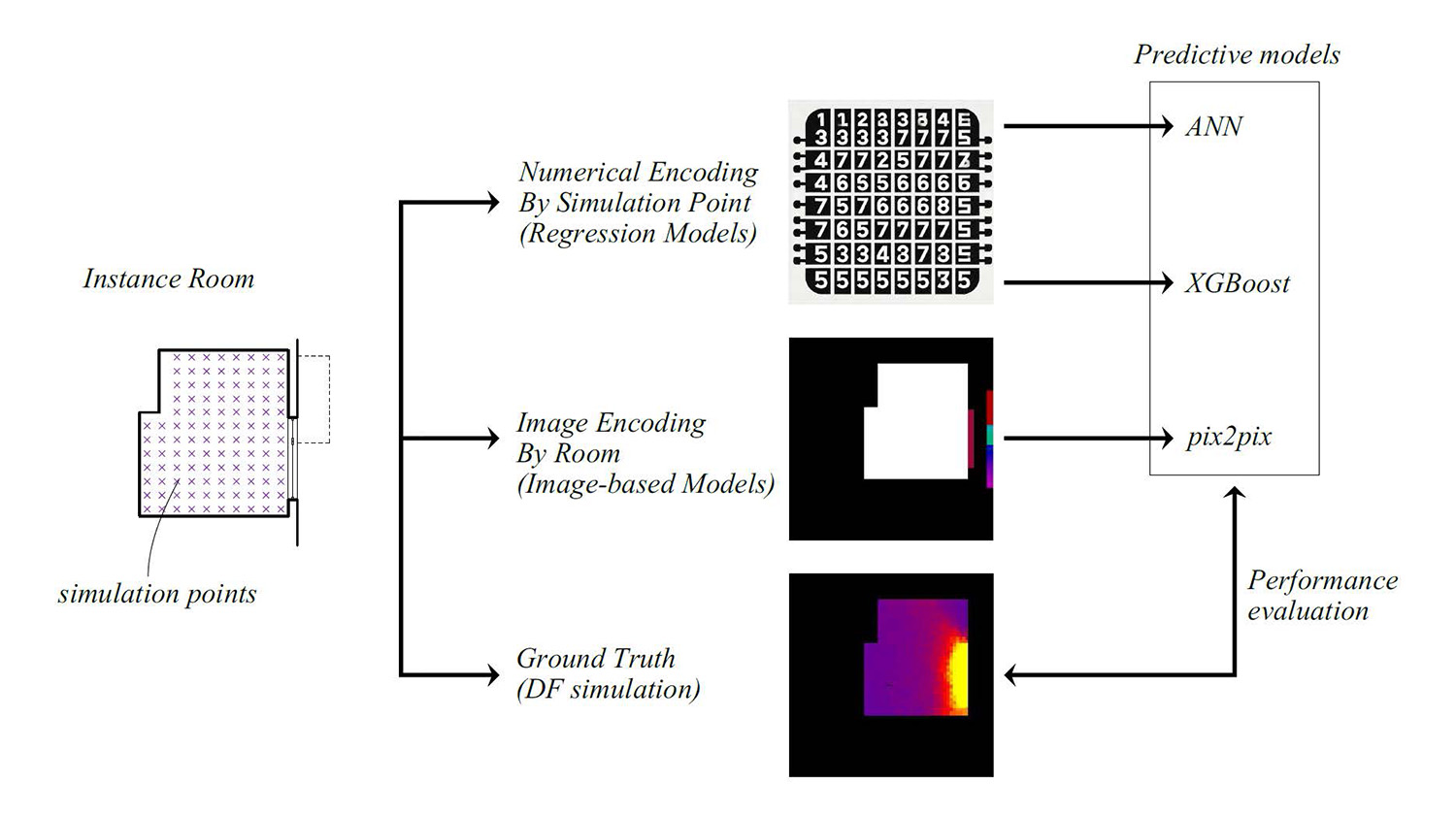
One dataset, two encodings, three models: the pipeline behind the study.
Approach
We tested one question two ways: is it better to feed a model numbers or images? The numerical route encoded each room into geometric features (window solid angle, obstruction factors, distance to window) and trained regression models — an artificial neural network and XGBoost. The image route encoded each room as a 128×128 false-color image and trained Pix2Pix, a conditional GAN that generates the predicted daylight map directly from the image. Both were validated against ground-truth physics simulations and against the Swedish and Norwegian/Danish daylight standards using confusion matrices.
GROUND TRUTH
ANN PREDICTION
XGBOOST PREDICTION
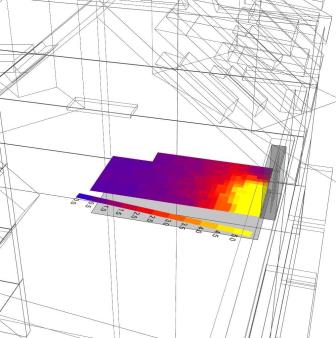
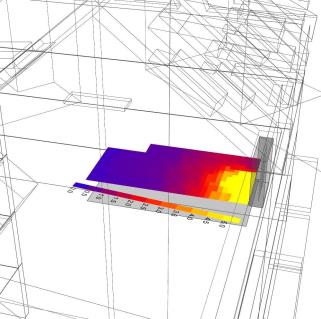
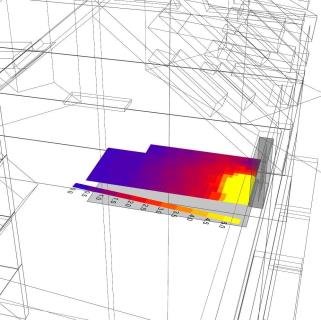
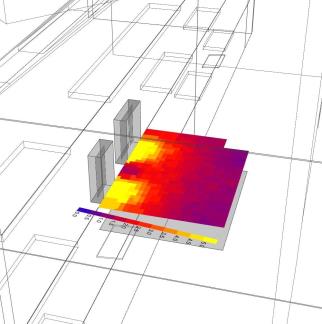
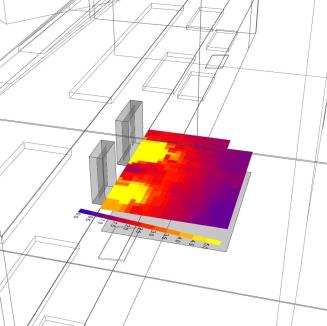
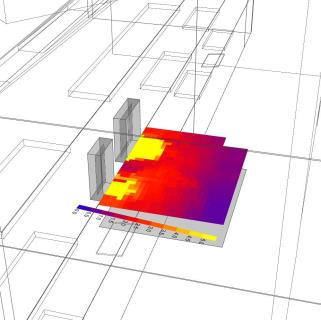
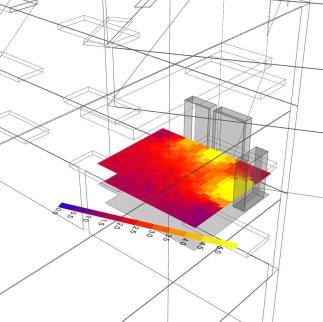
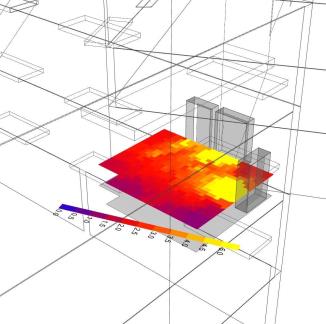
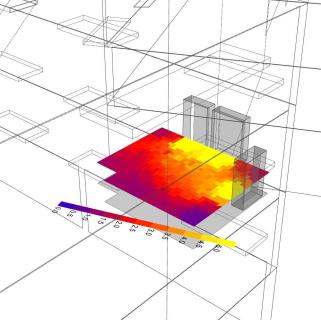
Model predictions (centre, right) against physics simulation (left), visually near-identical.
Results
Both model families predicted regulatory compliance with roughly 85-95% accuracy depending on the standard. The ANN reached a test MSE (mean squared error) of 0.000304 on point-level predictions, and XGBoost hit 100% correct predictions for passing rooms under the Danish/Norwegian standard. The trained models were deployed into prototype plugins for Rhino and Revit that return daylight feedback in under a second.
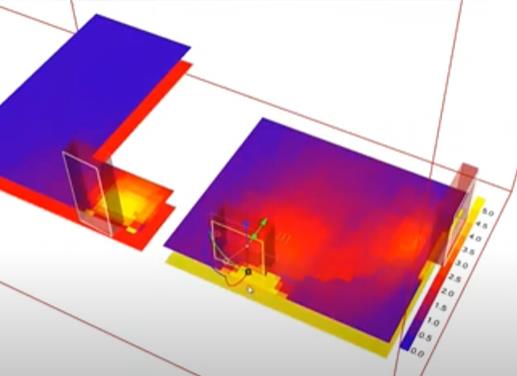
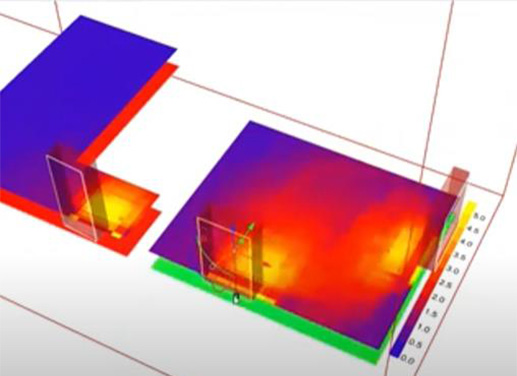
Deployed proof of concept: live compliance feedback inside CAD software
Citation: Daylight factor prediction using machine learning: A two-way study using numerical encoding and regression models, versus image encoding and pix2pix. Building and Environment, Vol. 274, Elsevier, 2025.
The research code is proprietary to IAAC; figures are reproduced from the published article.
